Church Scam Prevention Training That Lets Your Team Practice
Not Ready for the Lab Yet?
Start with our free guide: 7 Church Scam Warning Signs Every Staff Member Should Know.
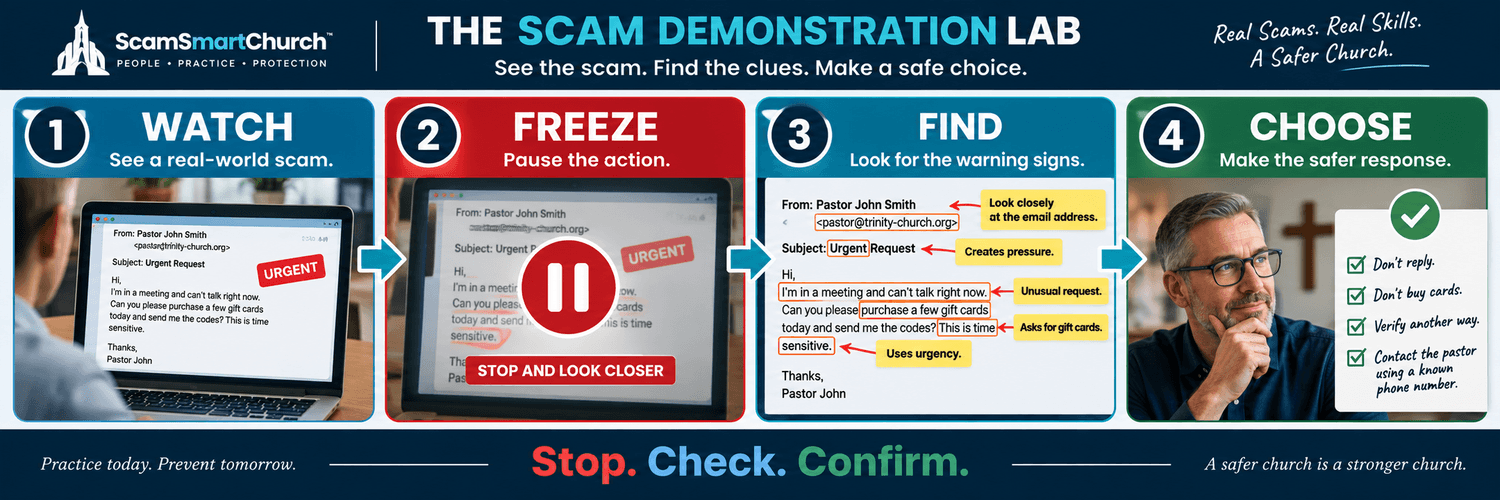
Don’t Just Hear About Scams. Experience Them Safely
*image from the Scam Demonstration Lab Training
Would Your Church Catch These?

Scammers use real names and urgent favors to make fake messages feel believable.
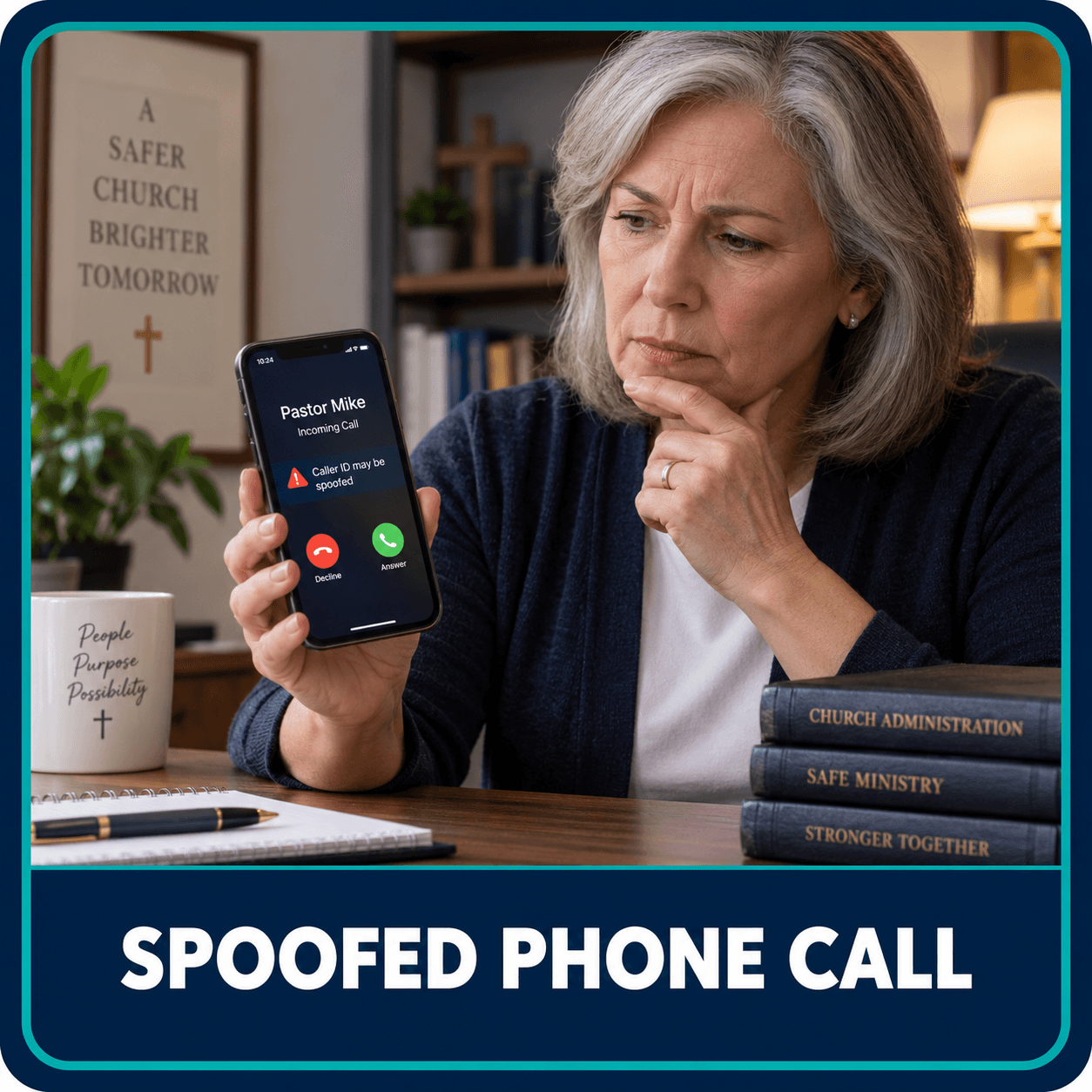
Caller ID can display a trusted name or number—even when the caller is a scammer.
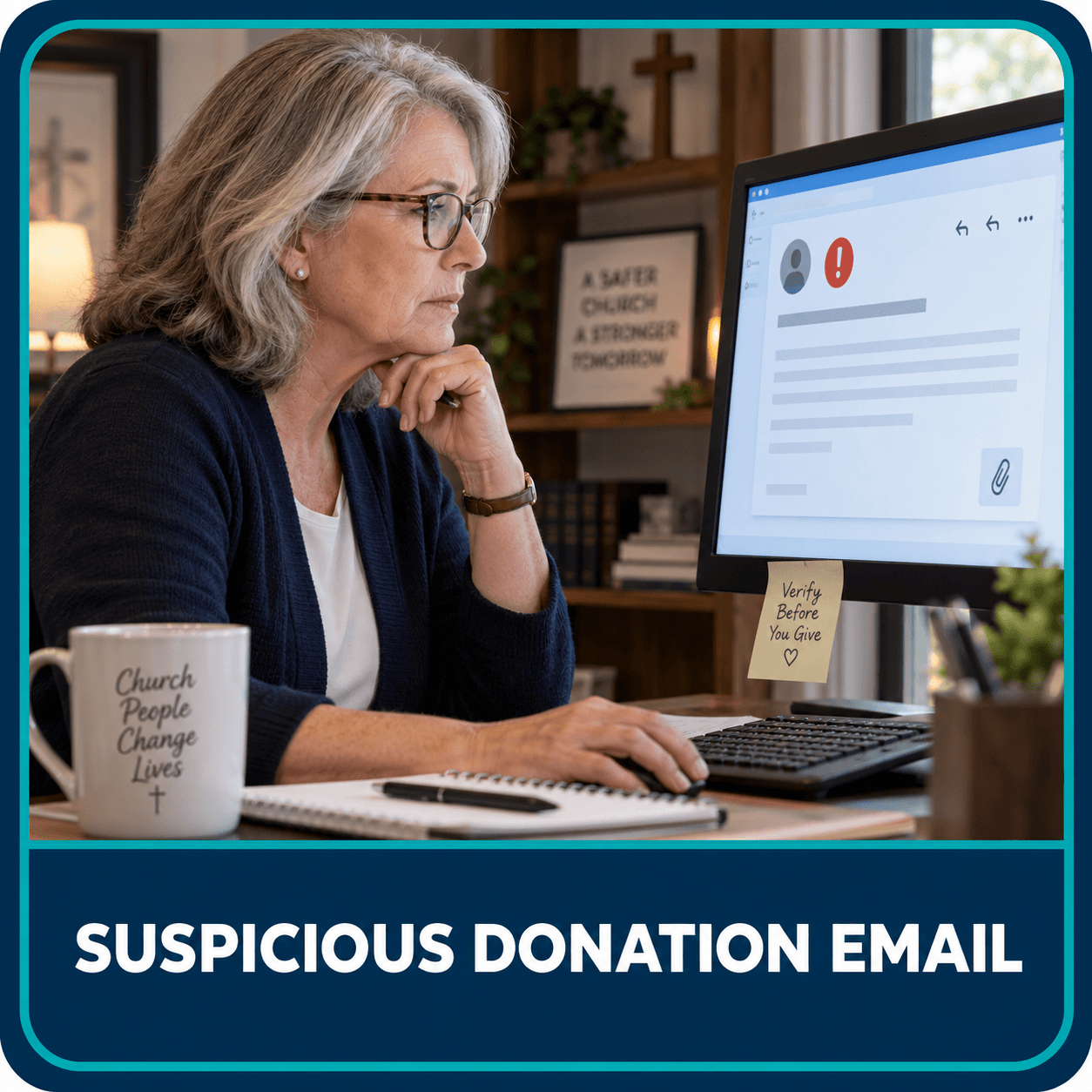
Fake donation requests may use emotional stories, dangerous links, or changed payment instructions.
Scammers often do not attack a church’s weakness. They misuse its trust, kindness, and willingness to help.
Who This Training Is For
Designed for anyone who helps lead, serve, communicate, or handle money in a church.
Church Leaders
Pastors, ministry leaders, and committee members who guide decisions and communication.
Church Staff
Administrative, financial, communications, and ministry staff who handle daily church business
Church Volunteers
Treasurers, trustees, team leaders, and volunteers who receive messages, manage information, or help handle money.
Church Members
Members who use email, text messages, online giving, social media, or church websites.
What Church Access Includes
3 Demonstration Lessons
Experience realistic text, email, and phone scams in a safe learning environment.
Church Action Kit
Download practical checklists and response tools your church can begin using immediately.
Church Access
Use the training with your leaders, staff members, finance teams, and volunteers

Why I Created ScamSmartChurch.com
Churches are built on trust, generosity, and a willingness to help. Sadly, scammers try to use those strengths against good people.
I created ScamSmartChurch.com to give church leaders, staff, volunteers, and members clear, practical training without fear, shame, or confusing technical language. My goal is simple: help people pause, check, and confirm before a scam causes harm.
Mitch Johnston
Founder, ScamSmartChurch.com
Questions Churches May Ask
The training is helpful for pastors, church staff, treasurers, trustees, ministry leaders, volunteers, and members who use email, text messages, online giving, social media, or church websites.
The Scam Demonstration Lab is a 20-minute guided training your church can run during one staff or leadership meeting. It includes three realistic scam demonstrations, discussion prompts, and practical response tools.
No. The Scam Demonstration Lab is designed for everyday technology users. Everything is explained clearly, step by step, without technical jargon or making anyone feel embarrassed for asking questions.
No. Scammers target churches of every size. The training is practical for small congregations, large churches, and everyone in between.
The Lab demonstrates a fake pastor text, a suspicious donation email, and a spoofed phone call. The Church Action Kit also provides guidance for payment changes and what to do if someone already clicked or responded.
Participants will know how to slow down, spot warning signs, verify suspicious requests through trusted contact information, and act quickly if someone clicks or responds
Enter the Scam Demonstration Lab
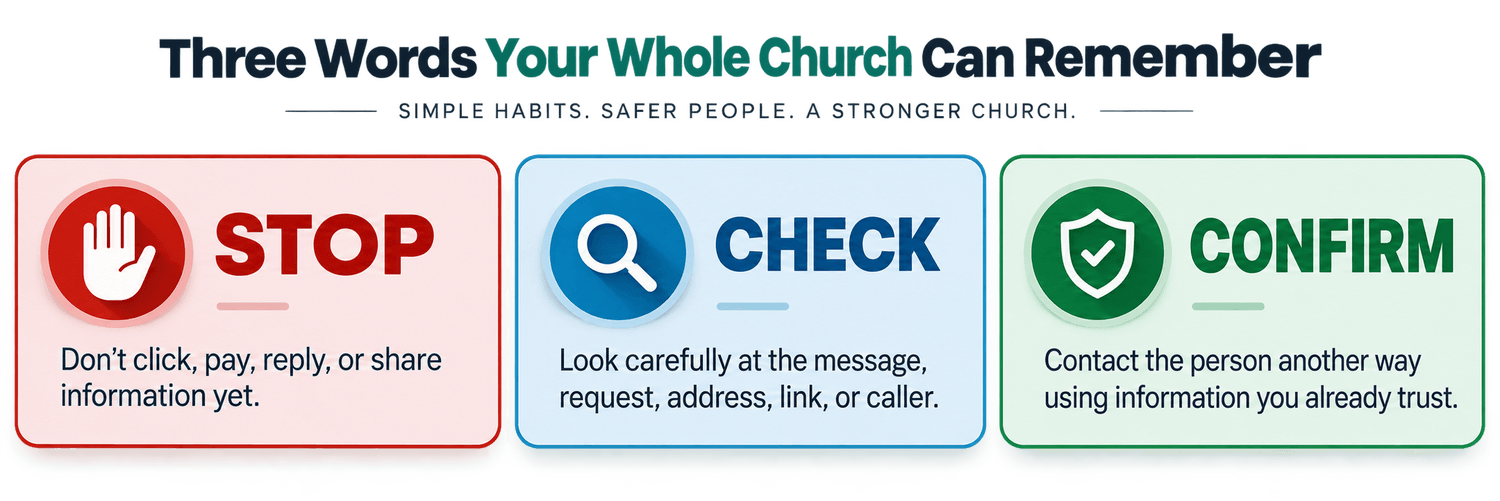
See realistic scams. Find the warning signs. Practice Stop. Check. Confirm. before fear, urgency, or confusion takes over.